LOL (/lal/) vb.
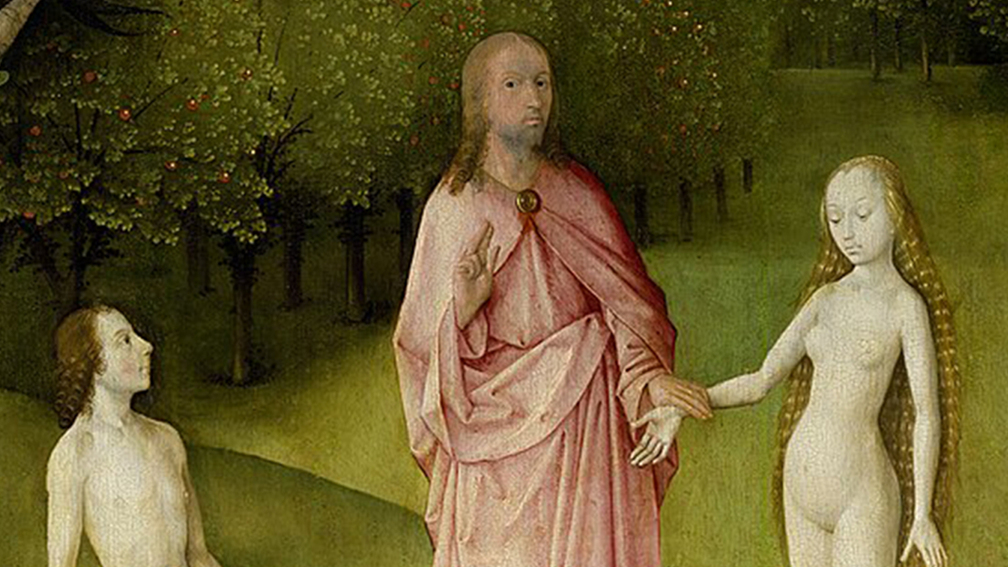
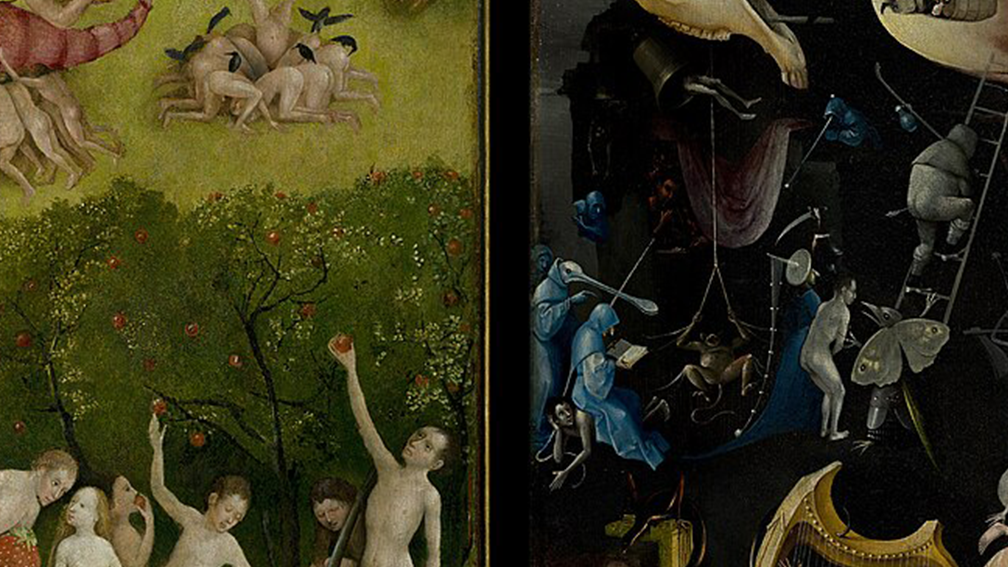
1. Some decay opens the original structure up, lets us see what it was really made of.
2. LOL I say out loud to my class in response to Harry, who admits that he did not do the homework because he was too busy “making gains.” El Oh El. I spell it out. But even if I had said lolll, lawl, as in drawl but with an L, I would have already been—by virtue of speaking and not guffawing—rejecting the claim of the phrase itself. Laugh out loud, LOL, can’t be said and done at the same time. A more guttural haAHHAJSJWHAHAH normally expresses the animal reaction.
And so what purpose does LOL serve?
To Harry, the el oh el positions me as an ironic overlord, both distancing me from him by virtue of our roles in school, and also reminding him of our odd proximity; like him, I have friends to text, the internet to peruse. I am not some blind matron. If he breaks his role as dutiful student, I can, in turn, break mine as respectful teacher.
Further: by suggesting that I am laughing out loud, but actually looking at him steadily with a serious expression, I seem to mean something else. Part of the power of the LOL is its ability to signify something amiss without naming it directly: Some part of what you have said is comical, I want to communicate, but more than comical, not funny, per se, it’s absurd. The ambiguity allows him space to figure out this tension on his own. It allows me to act as a mirror, reflecting the absurdity of his excuse back to him.
Because part of the rule of being a teacher, like a parent, is to accept the reality that you will not be wholly seen in the way that you promise to wholly see and understand a student. It is not your right to hurt the child, even if the child hurts you. So I create a barrier by which I shield myself from the pain of being insulted (he didn’t do my homework—does he dislike the book? the class? me?). And thus the mirror turns back towards me: The need to resort to irony, to cut through someone without naming the pain they might have caused; I do it to save face. Maintain my cool. Dismiss and distance. Lol, with a lisp, childlike: Wall, which is what it is.
3. When an acronym is assimilated into the vernacular as a full word, the process is called lexicalization. SONAR, RADAR, SCUBA, are examples of this. Texting and Twitter have lexicalized many others: LOL, WTF, TBD, LMAO, LMFAO, etc. I’m interested in LOL because unlike SONAR, it still has a nominal attachment to the letters it stands for. We still know its origins, and in a way LOL is the perfect deconstruction of the laughter for which it purportedly stands.
LOL hardly ever refers to laughter itself. It is, in a sense, the ruins of laughter, the patient displayed on the table open for examination. Lol is a lull, a wave, a roll. It is hardly a ha or a guffaw or a pfffhh or a huhuh. It is mellifluous, ebbing, and gentle. So unlike laughter is it that it makes one wonder if it really signifies jolliness or merriment or humor at all. But does laughter itself serve to express those things?
Sociologists have split laughter into two categories: the first, Duchenne, is the kind that is “spontaneous, emotional, impulsive and involuntary laughter is a genuine expression of amusement and joy.” This is what LOL explicitly refers to: Laugh out loud. But by virtue of having chosen to write the phrase down, the LOL can’t be reflexive, spontaneous, or involuntary. By its nature, LOL is voluntary. This paradox strips laughter to its next layer: Non-Duchenne laughter, which is a “studied and not very emotional imitation of spontaneous laughter.” It is laughter as “social strategy,” the purpose of which is to reward the behavior of others, ease tensions and reinforce norms. This is why babies laugh more when they see other people doing it, and why we rarely laugh alone. If you say something out of turn, a laugh is a way to assimilate it into the normative culture. It signals safety and power. As with an accent, members of social classes laugh in similar ways to signal their membership to a tribe. This is the underbelly of LOL—the “strategic, calculated, and even derisory and aggressive.”
Oscar Wilde knew this doubleness of laughter, always displaying its contradictions. “Laughter is not at all a bad beginning for a friendship, and it is far the best ending for one,” Lord Henry says, verifying the cruelty latent in that action. Later in Dorian Gray, “horrible laughter” emerges from bars and women have “hoarse voices and harsh laughter.” Laughter as derisive and cruel, or else as a disguise for something worse: vulnerability. “There was pity in her eyes that became laughter on her lips,” he writes. Wilde, known for his humor, held laughter up for the light to reflect its nastier facets—the hoarse, harsh, and pitiful.
LOL deconstructs, or makes apparent to us all, what laughter has meant all along. Sometimes we laugh because something is funny, but more often than not, it expresses our relation to our social context, or—in the case of Harry, or Lord Henry—reifies a hierarchy. It makes clear that we are connected, in positions of relative power, at all times currying favor or asserting dominance, protecting our egos, or welcoming someone in. That’s what’s dangerous about its lulling tone --- lol, lol, lol, lol... it hides its secret threat, its violence.
4. Some recently received texts:
I got that American flag bear themed folk art painting from the flea market. Lol.
Can you help me with outfit lol
i wanna own a house upstate with you lol
guy looked like 18, ate too many tacos, went to a palm reader at 2am lol
At first, I read the lol as a gesture of self-negation. It diminishes the person’s own investment in the activity at hand.
im gunna start writing a novel lol
I paid 600$ to have a psychic predict my future husband’s job. Lol.
lol i quit my job
I realize on a second read that rather than diminishing, the authors are acknowledging the distance between themselves and the action they are describing. LOL, to say: I am the narrator of my own life, and I watch myself as a character with motions, desires, thoughts, and hopes. The distance is protective (wall), but it is also constructive and affirming. I can tell the story as I please. I am the artist of my own life.
The only Nietzschean aphorism that stuck with me from my freshman philosophy survey:
What, if some day or night a demon were to steal after you into your loneliest loneliness and say to you: “This life as you now live it and have lived it, you will have to live once more and innumerable times more; and there will be nothing new in it, but every pain and every joy and every thought and sigh and everything unutterably small or great in your life will have to return to you, all in the same succession” […] Would you not throw yourself down and gnash your teeth and curse the demon who spoke thus?... Or how well disposed would you have to become to yourself and to life to crave nothing more fervently than this ultimate eternal confirmation and seal?
When Nietzsche’s little devil comes up on our shoulder and asks us if we would live our lives infinitely over again, it is hard to say that we would still want to be that girl who hooked up with her ex at the holiday party again (lol). Nietzsche asks: What would it take for you to affirm your life? And indeed, how hard to validate our many moments of weakness, collapse, desperation, rage; or else, our desires, our reaches, our aspirations—writing the book, quitting the job, suggesting we move in together! Except, for Nietzsche, it is not the action itself that has inherent value, but the way you play the tape—how you frame and reconstruct the moments. To say that you spent two hours on Instagram again is to say, I am trapped in my addiction. To say I spent 2 hours on my phone, lol is to say, I am one step removed from my actions; tomorrow I will be different. Conversely, I want to write a novel lol is to recognize that such an endeavor is so grand it will require more fortitude than just a little texted vow—and yet—within that space of awareness, the space between myself and I, opened up by lol, I will be able to begin.
These three little letters say nothing about laughter. Instead they say: It may be small, but it is my life and I am its author. Or maybe that’s taking it too far. Who’s to say. Lol. ◼
GUILLOTINE(/ˈgiləˌtēn, ˈgē(y)əˌtēn /) n, vb.
1. You might object: the guillotine is the great thwarter of decay. Thwack and there goes the head! No cancer, no malignant tumors, no slow descent; just your youthful charm and energy, preserved in that sphere of self once located atop the shoulders, now rolling gracefully through the throngs of eager onlookers. Or perhaps, thinking of decay, you picture the lonely structure, abandoned, left rotting since its last appearance on the public stage in 1977 (for the French criminal, Hamida Djandoubi). 48 years of disuse. A technology of the past.
It’s true that the guillotine’s purpose defies decay and its structure is more out-of-use than falling apart. But I’m less interested in the machine than I am in the decay of the name: Joseph-Ignace Guillotin. Some decay strips the outer layers to reveal the machinations underlying a human facade. No one named Alexa and Siri will ever be free of the robot that lurks beneath their names. Their humanity has been subsumed by the machine that was once meant to imitate them. Guillotin, a physician dedicated to ending capital punishment—the only thing left of him, the name he lent to that murder machine.
2. In 1791, in the midst of class revolution and inspired by the Declaration of the Rights of Man, Guillotin stood in front of the National Assembly of France and proposed that—if they couldn’t do away with capital punishment once and for all—they should use a machine that would do the deed in more humane manner. In his own words, “Like a cool breath on the back of the neck…The blade hisses, the head falls, blood spurts, the man exists no more … With my machine, I’ll have your head off in the blink of an eye, and you will suffer not at all.” This tool would be more democratic and compassionate, he claimed, swiftly ending the lives of rich and poor alike.
Before Guillotin’s machine, death—in addition to life—had been divided by class. In France, the proletariat were hanged in the streets on lampposts. Beheading was reserved for the aristocrats, and even the most practiced professionals were prone to mis-hits. Some notably thick necks (or dull blades) include French general Duc de Lally whose five or six swings from the first executioner required another to step in, and Mary Queen of Scots, for whom at least two hacks were required before her head was wrested from her body. By requiring that everyone die the same way, the new beheading machine ensured an aristocratic end for all, and therefore to none, and if that’s not democratic, Josephy-Ignorace didn’t know what was.
At first, the people were skeptical. Guillotin was mocked—his proposal seemed almost like science fiction. A derisive song became popularized on the streets that made fun of this proposal:
The deputy Guillotin[Ann. 2]
In the medicine
Very educated and very smart
Made a machine
To purge the body of France
From all people with projects
That’s the guillotine, hurray
That’s the guillotine
Guillotin tried to distance himself from the machine that was to serve the purpose he disagreed with and the proposal for which he was shamed. What’s more, he refused to create the prototype of the machine when it was finally taken seriously (the honor went to Tobias Schmidt, a piano maker). And yet, the song was already stuck in the heads of the people, forever binding him to the device.
3. An estimated 20,000 people were beheaded by the machine in the course of the French Revolution. On Christmas Day in 1793 alone, 247 people met their maker on the block. Made with compassion in mind, the guillotine turned death sterile, modern, and ubiquitous. Democracy, lest we forget, also diminishes the individual; if all are equal, none stand out. At least to be hacked to death means someone comes into contact with your particular body. Mary Queen of Scots got the recognition of two hacks, as opposed to the countless hordes who, being severed from their bodies, were also severed from the specificity of being an individual with sinew and bones in specific places, with as many specific difficulties ending their lives as there were living them.
What’s more, the supposed humanity of the whole process soon came into question. One woman’s head, recently executed, was held up for the crowd to slap, her cheeks purportedly blushing. Doctors began to study patients condemned to the block. A study in 1956 reported that death via guillotine “is not immediate… every vital element survives decapitation. The doctor is left with this impression of a horrible experience, of a murderous vivisection, followed by a premature burial.” Around this time, a chaplain at a prison insisted he could, after decapitation, “see the condemned man’s eyes fixed on me with a look of supplication, as if to ask forgiveness.” Studies have since corroborated these accounts: something like life, or at least the registering of pain, continues on for minutes beyond the decapitation—up to 15 seconds in rats, and up to 8 hours in the case of eels.1
If we take these to be true, it suggests that the line between life and death, when crossed too quickly, accidentally creates a kind of bridge. As in Sula by Toni Morrison, when the soldier at war sees a man’s head blown off, but his body “[running] on, with energy and grace, ignoring altogether the drip and slide of brain tissue down its back,” or Dr. Frankenstein, whose monster is created from the parts of the dead. The guillotine accidentally births something beyond-human: life beyond death, awareness beyond comprehension. This half-human-beyond-human comes to us as a rebuke against optimization, against machination and the promise that with enough technology, life and justice can be clean and controlled—a rebuke against the hubris of killing another person at all.
And like the head that lives on, sensing and gasping and blushing, so does the name Guillotin, severed from its human form, subsumed by the machine that came to define the man. Yet even in the most sterile of mass executions, humanity cannot be totally sanitized—a little piece remains clinging, like a flag ripped up in a storm.
4. According to a number of informal Reddit surveys and my own anecdotal experience, the past 5 years has seen a significant uptick in guillotine related memes, often directed at celebrities with ostentatious displays of wealth or corrupt politicians. In 2020, a tweet circulated showing Bernie Sanders leaning over a white board, entitled “Plan C” with a picture of a guillotine underneath it. More recently, a mock guillotine was erected in protest of Trump’s election, and one tweet, featuring the tech billionaires at the inauguration included the caption: “One day comrades this will be the queue for the guillotine.” It has become fashionable, aestheticized, internet-sized, meme-ified. One 2024 Fashionista article introduces the new, hot hairstyle, the “Guillotine cut” a “messy, cropped style that harkens back to post-revolutionary France.” The guillotine has become a guillo-meme.
But just as fast as fashions change, so could the guillotine be turned on the masses. In the same way that it turned on its progenitor by taking his name, it also turned on the Revolutionary faction that had once employed it to enforce the Reign of Terror. Robespierre, a proponent of the machine to penalize “opponents of the revolution,” ultimately faced the blade himself. The guillotine, then, represents the whims of the masses, the caprice of political favor. It is a symbol of a true democratic impulse verging on the anarchic—everyone will be killed the same way, and anyone could be killed at any moment. Bob Dylan knew this when he wrote "It’s Alright Ma (I’m Only Bleeding)":
“And if my thought-dreams could be seen
They’d probably put my head in a guillotine
But it’s alright, Ma, it’s life, and life only”
He paints a world in which the guillotine, like all things, has been turned against the radical, to suppress and deny individual thought. Quickly, it changes from friend of the revolution to Big Brother. In fact, the French name for the “guillotine hairstyle” is “coiffure a la victim,” or hairstyle of the victim. And this title is appropriate because the identity of the victim is ambiguous: could be you or me, or anyone.
The question remains: Is the guillotine a tool to punish the elite or to oppress the masses? The way it is used on the internet seems to suggest the former; it is an image that conjures the desire for violence to turn the robots against the powers that be, to see and feel that mass violence can be in the hands of the people, not because it’s more humane, or more efficient, but because it would be a force powerful enough to decimate the 1%. But even that has a doubleness. The same philosophical principles that motivated the creation of the guillotine mirror the ethos of tech startups today. Make death more efficient! The pitch to the VC firm reads.
Indeed, the people who promote the same theories of efficiency and egalitarianism are the tech billionaires who created or run these platforms in the first place. Because what is Facebook, or X, but a social media platform created purportedly in the name of “the people,” in search of more efficient and decentralized news, more direct modes of communication, when in reality they centralize the power and wealth in the hands of the few technocratic elite. And yet, as these many Tweets suggest, the double-ness of the whole discourse is that it’s precisely the founders of those platforms themselves who would be the target of the guillotine; these same people who have profited off the promise of more democratic discourse at whose necks we point the guillo-meme. “If a billionaire is telling people a 40 hour work week is for losers then it’s time to bring back the guillotine.” This is a post about Elon Musk on X, owned by Elon Musk.
And so dog-like, it chases its own tail, it attacks its makers, its proponents, while Guillotin himself lies headless, his name living on beyond his body. The guillo-meme is empty, open, un-affiliated. Critically, the guillo-meme is not guillotine. Neither is the haircut. It is an image, a facade, a symbol. It is more a description of a feeling than a physical force. Which makes me wonder if the guillotine today doesn’t actually symbolize the violence we would like to enact, as much as it is a manifestation of the severance that most Americans feel already exists.
To desire that violent acts befall the richest, most corrupt among us is one thing. This bloodlust—while fearful—appears to me hopeful, or at least active. Here, a machine that can solve our situations! The guillo-meme, on the other hand, is a symbol, a representation. It’s passive, inert; it is, after all, an image. It seems to me that the online discourse is there because it is just that, discourse. That we look around us and see that technocratic elite run our lives, our worlds, even the sites on which we impotently shout the protests that they don’t mute because of the power accumulated with each new post. The guillo-meme is not hopeful, it is a sign of what has already happened—we have been cut off from the people who run our worlds, and there is really no hope of us restoring that power to “the people”; it was like having my picture taken after I got a black eye: both disturbing to see myself with a bruised up face, but also comforting because it is accurate. The pain I was in manifested in the external world.
Herein lies the real decay of the machine. Once, it represented promise—if a fearfully capricious one—of retribution. Now it merely represents what already is: that fumbling mess of a body politic, living painfully separated from its own head, writhing frantically on the chopping block. ◼
1. These case studies are compromised due to the few data points, but scientists have concluded that decapitation is not a humane form of punishment. Questions around consciousness and its limits remain ambiguous, difficult to measure.
.jpg)